
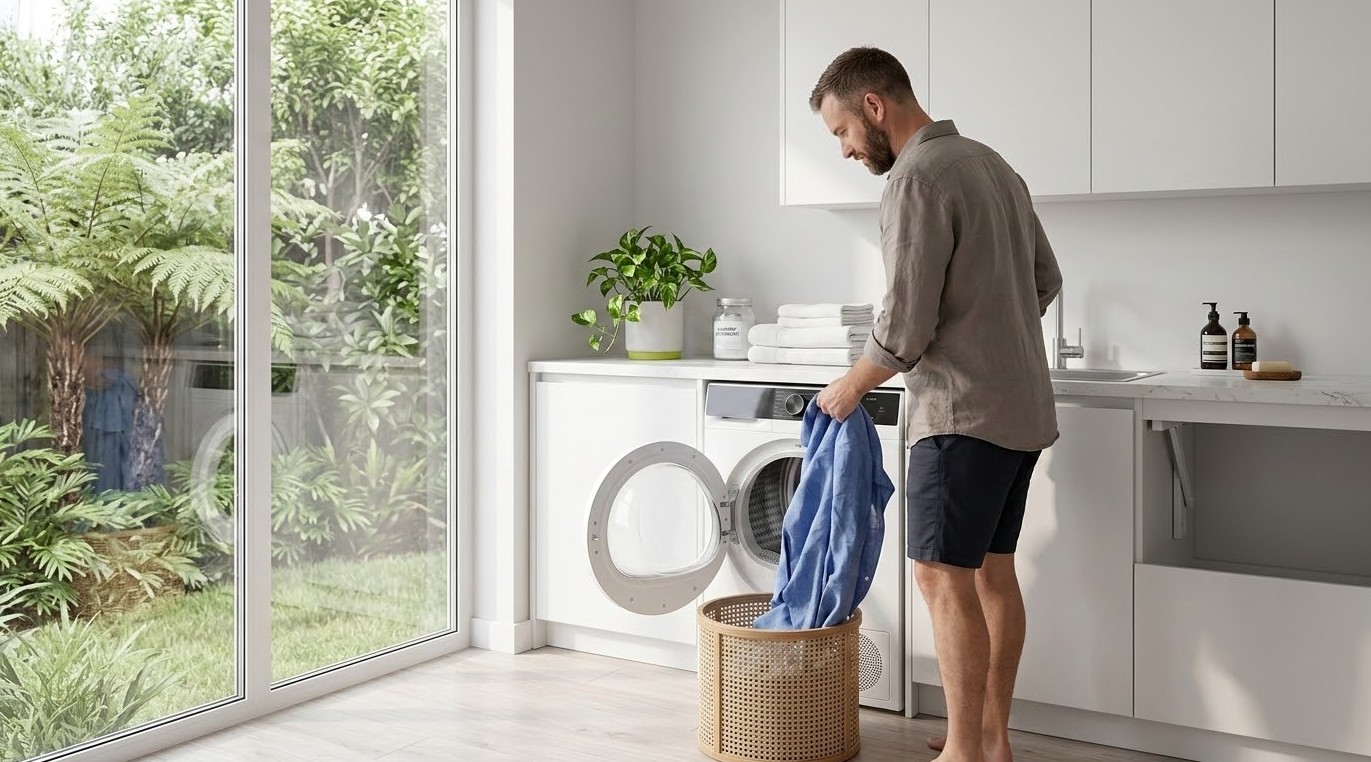
If you are comparing energy-efficient dryers, the first thing to know is that efficiency is only part of the buying decision. The right dryer also needs to suit your household size, laundry space, drying habits and budget.
That is why the most energy-efficient dryer is not always the cheapest one to buy, and it is not always the fastest either. For many Australian homes, the best choice is the dryer that balances running cost, capacity and installation needs.
This guide walks through the main dryer types, how the Australian Energy Rating label works, what actually affects running costs and which features are worth paying for.
What makes a clothes dryer energy-efficient?
An energy-efficient dryer uses less electricity to dry the same amount of laundry. In practice, that usually means lower running costs over time, especially if the dryer is used often.
In Australia, the Energy Rating label is the easiest way to compare dryers. It shows a star rating and an annual energy consumption figure. According to Energy Rating, the label compares similar appliance types and sizes, so the numbers only make sense when you compare like with like.
The annual energy use figure matters just as much as the stars. The Energy Rating Calculator explains that lower consumption means the appliance uses less electricity. That is useful when you want to estimate what a dryer may cost to run over time.
The key point is simple: a good energy-efficient dryer is not just about a high star count. It is about how the dryer performs for your household, your laundry routine and your space.
Why star ratings matter
The star rating gives you a quick way to compare efficiency within the same product group. More stars generally mean better efficiency.
But the rating does not tell the full story by itself. A larger dryer can use more energy than a smaller one, even if it has a similar star rating, because it is doing more work.
Why annual energy use matters
Annual energy use is often more practical than stars on their own. It helps you compare the likely running costs, especially if you are weighing up two dryers that look similar on paper.
If you run the dryer several times a week, that figure becomes even more important. Small differences in consumption can add up over years of use.
Which type of dryer uses the least energy?
For most households, a heat pump dryer uses the least energy. It reuses heat during the drying cycle instead of venting it out as waste.
That is why heat pump models are often the answer when people search for the most energy-efficient dryer. They are usually the best choice for lower long-term running costs, although they tend to cost more upfront.
Condenser dryers sit in the middle. They do not need external venting, which makes them flexible, but they usually use more energy than heat pump models.
Vented dryers are generally the cheapest to buy. They are also the least efficient, because they push hot, moist air outside and rely on more energy to keep drying.
Heat pump, condenser and vented dryers compared:
| Dryer type | How it works | Energy use | Upfront cost | Drying speed | Ventilation needs | Best for |
|---|---|---|---|---|---|---|
| Heat pump | Recycles heat during drying | Lowest | Highest | Slower | No external venting | Frequent users, apartments, lower running costs |
| Condenser | Collects moisture in a tank or drain | Medium | Medium | Moderate | No external venting | Homes that need flexible installation |
| Vented | Pushes moist air outside | Highest | Lowest | Fast | External vent required | Tight budgets, low-use households |
| Washer dryer combo | Washes and dries in one machine | Usually higher than dedicated dryers | Medium to high | Slower for drying | Usually no external venting | Very small laundries or dual-purpose setups |
A heat pump dryer is usually the strongest long-term choice if efficiency matters most. A vented dryer can still be fine if the machine will only be used occasionally and the upfront budget is tight.
Are heat pump dryers worth it?
For many buyers, yes. Heat pump dryers usually cost more to purchase, but they can reduce running costs over time.
They are often worth considering if you dry clothes regularly, run towels or bedding often, or want a dryer that suits a compact laundry. They are also a strong option when you do not want to deal with external venting.
The trade-off is drying time. Heat pump dryers usually operate at lower temperatures and can take longer to finish a load. That is not a problem for every household, but it does matter if you expect a quick turnaround.
Heat pump dryers are usually better for:
- Families who do laundry often
- Apartments and enclosed laundries
- Buyers focused on lower running costs
- Households that want less heat and moisture in the laundry
- People who are willing to pay more upfront for a longer-term savings
Heat pump dryers may not be the best fit if:
- You only dry clothes occasionally
- You need the lowest upfront purchase price
- Speed matters more than energy use
- You already have a simple vented dryer setup
If your household uses the dryer a lot, the higher purchase price is easier to justify. If you rarely use it, the savings may take too long to matter.
How much does an energy-efficient dryer cost to run?
Running cost depends on three main things: the dryer type, how often you use it and how full the drum is on each cycle.
A cheaper dryer can look attractive at checkout, but it can cost more over time if it uses more electricity. That is why the cheapest dryer to buy is not always the cheapest dryer to own.
Frequent users usually benefit most from efficiency. A family drying towels, school uniforms and bedding each week will feel the difference more than a household that only uses a dryer now and then.
Example: upfront price versus running cost
| Scenario | Dryer type | What you pay upfront | What you may pay over time | Best fit |
|---|---|---|---|---|
| Low-use home | Vented dryer | Lower | Higher running cost | Occasional drying, simple budget buy |
| Frequent-use home | Heat pump dryer | Higher | Lower running cost | Families, regular laundry, long-term savings |
| Flexible install | Condenser dryer | Medium | Medium | Homes without external venting |
The exact numbers will vary by model and usage, but the pattern is consistent. The more often you use the dryer, the more important energy efficiency becomes.
If you are comparing options, it helps to think in years rather than weeks. A dryer that is cheaper to run can make up for a higher purchase price if it is used often enough.
What size dryer do you need?
Capacity matters because a dryer that is too small will struggle with family loads, while one that is too large may be unnecessary for a couple or single household.
The right size depends on your laundry habits, not just the number of people in the home.
General dryer size guide:
| Household type | Typical capacity guide | Why it suits |
|---|---|---|
| Single person or couple | 6kg to 7kg | Good for smaller loads and occasional use |
| Small family | 7kg to 8kg | Handles regular laundry without being oversized |
| Larger family | 8kg to 9kg+ | Better for towels, bedding and frequent use |
| Mixed laundry or bulky items | 8kg+ | Better for doona covers and larger loads |
A dryer that matches your washing machine is often easier to use. If your washing machine is much larger than your dryer, you may end up doing more drying cycles than needed.
Overloading also hurts performance. Clothes dry less evenly, cycles take longer, and the machine may use more energy than expected.
Energy efficiency, drying time and fabric care
One common concern is that an energy-efficient dryer will take too long. That can be true, especially with heat pump models.
Lower energy use usually means lower heat. Lower heat often means longer drying times. That does not make the dryer worse, but it does change how you use it.
For many households, slower drying is not a serious issue. If you are planning laundry around the day, the trade-off can be worthwhile.
Sensor drying helps here. Instead of running for a fixed time, the dryer stops when the load is dry enough. That can reduce wasted electricity and also help avoid overdrying clothes.
Lower temperatures can also be easier on fabrics. That matters if you dry workwear, delicate items or clothes you want to keep in good condition for longer.
Installation, ventilation and laundry space
Dryer type is not just about efficiency. It also has to suit the room it is going into.
Vented dryers need external venting, which makes them less suitable for some apartments or enclosed laundries. If the airflow is poor, moisture can build up in the room.
Heat pump dryers usually work well in compact spaces because they do not need external venting. That makes them a strong option for apartments, townhouses and laundries built into cabinetry.
What to check before you buy:
- Does the dryer need external venting?
- Is there enough space for the door to open fully?
- Will it need stacking with a washing machine?
- Is there room for heat to escape around the unit?
- Does the model need a drainage connection?
- Will the lint filter be easy to clean?
- Are the dimensions suitable for the space you have?
If your laundry is tight on space, installation details can matter more than brand preference. The wrong dryer can be awkward to use, even if it looks efficient on paper.
Features that actually matter
Not every feature is worth paying for, but some make a real difference to daily use.
Features worth comparing:
| Feature | Why it matters | Worth paying for? |
|---|---|---|
| Sensor drying | Stops the cycle when clothes are dry enough | Often yes |
| Reverse tumbling | Helps reduce tangles and creases | Often yes |
| Delayed start | Let’s you run loads at more convenient times | Sometimes |
| Wool or delicate programs | Better for gentler fabric care | If you dry delicate items |
| Anti-crease function | Helps reduce ironing time | Useful for busy households |
| Filter indicator | Reminds you to maintain the dryer properly | Helpful |
| Quiet operation | Better for open-plan homes or small laundries | Worth it for some homes |
| Smart controls | Useful for monitoring and remote operation | Optional |
Sensor drying is one of the most useful features. It helps avoid wasting energy by stopping when the load is dry, rather than running longer than needed.
Reverse tumbling is also practical. It can help large items dry more evenly and reduce creasing.
Which energy-efficient dryer is best for each household type?
There is no single best dryer for everyone. The right choice depends on how the household uses laundry.
Best dryer by household type:
| Household type | Best option | Why |
|---|---|---|
| Families | Heat pump dryer with sensor drying | Handles frequent loads and lowers running costs |
| Apartments | Heat pump or condenser dryer | No external venting needed |
| Occasional users | Heat pump dryer | Vented dryers spend a lot more energy (higher electricity bill) and can make your laundry area quite hot |
| Eco-conscious buyers | Heat pump dryer | Lowest energy use and better long-term efficiency |
| Premium laundry buyers | Heat pump dryer with fabric care features | Strong performance and better day-to-day usability |
| Tight budgets | Compare vented and heat pump models carefully | Upfront price versus long-term cost matters most |
For frequent users, heat pump dryers usually make the most sense. For occasional use, a simpler dryer may still be the right fit.
That is why the best energy-efficient dryer Australia shoppers choose is usually not the same model for every home. The best match depends on usage, space and budget.
Common mistakes to avoid when buying a dryer
A lot of buyers focus on the wrong thing first. Price matters, but it should not be the only factor.
Common buying mistakes:
- Choosing based only on the upfront price
- Ignoring annual energy use
- Buying the wrong capacity
- Forgetting about venting requirements
- Assuming all high-star dryers perform the same
- Not checking the dimensions before ordering
- Overlooking noise in a small home
- Ignoring maintenance needs like lint filter cleaning
- Forgetting to compare warranty and delivery options
- The Installation requirements of their home
The biggest mistake is assuming all energy-efficient dryer models are equal. They are not. Dryer type, capacity and usage all affect how well the appliance fits your home.
When is an energy-efficient dryer worth it?
An energy-efficient dryer is usually worth it if you use the machine often, have a family or live in a home where outdoor drying is difficult.
It is also a sensible choice if you are replacing an old dryer that has become expensive to run. In that case, the extra upfront cost can be offset by lower energy use over time.
It may be less urgent if you only use the dryer occasionally, have plenty of outdoor drying space or need the lowest possible purchase price.
A good fit if you:
- Run the dryer several times a week
- Dry towels, bedding or uniforms often
- Want lower long-term electricity use
- Live in an apartment or enclosed laundry
- Are upgrading to a longer-term appliance
Maybe not the best fit if you:
- Use a dryer only in wet weather
- Need the cheapest available option
- Have easy access to outdoor clotheslines
- Do not mind a simpler dryer setup
How to compare energy-efficient dryers before buying’
If you are ready to compare models, use a simple checklist.
- Dryer type: heat pump, condenser, vented or combo.
- Energy rating: compare stars and annual energy use together.
- Capacity: make sure it suits your household size and laundry loads.
- Dimensions: check that it fits the space you have.
- Venting or drainage: confirm the installation requirements before buying.
- Drying programs: look for sensor drying, delicate cycles and anti-crease options.
- Noise level: important for open-plan homes or compact laundries.
- Maintenance: cleanable filters and simple upkeep save hassle later.
- Warranty: a longer warranty can add peace of mind.
- Price versus usage: think about how often you will actually use it.
If you are still narrowing down options, our clothes dryer range is a good place to compare different styles side by side. If efficiency is your top priority, our heat pump dryers are worth a look.
Compare energy-efficient dryers with Brisbane Appliance Sales
The best energy-efficient dryer is not always the highest-rated model on paper. It is the one that suits your household, laundry space and how often you dry clothes.
For many homes, a heat pump dryer offers the best balance of running cost and long-term value. For occasional use or tighter budgets, a vented or condenser dryer may still be the better fit.
If you want help choosing the most energy-efficient dryer for your home, Brisbane Appliance Sales can help you compare the options properly.
Browse our clothes dryer and heat pump dryer range online or visit our Brisbane showroom in Newmarket to compare in person.