
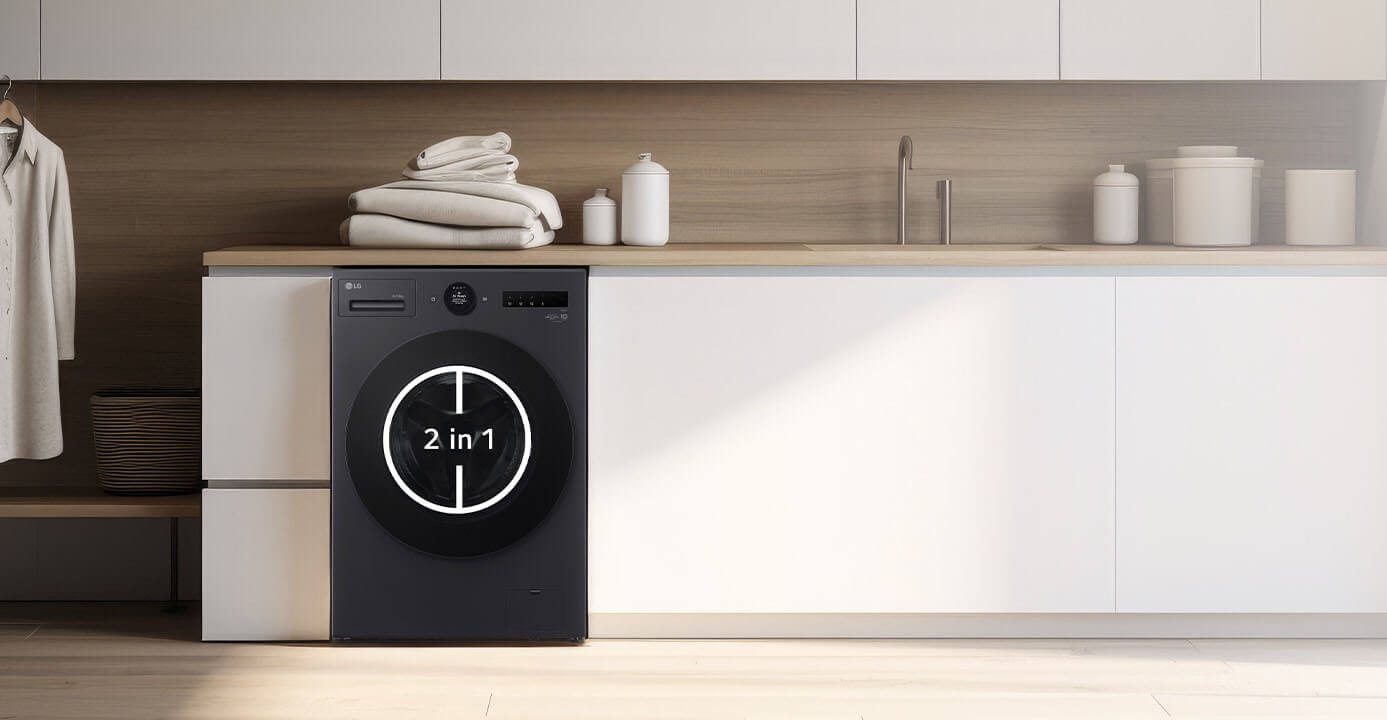
If your laundry is short on space, a washer-dryer combo can seem like the obvious fix. One machine, one footprint, no need to squeeze a separate dryer into a small room.
The hard part is knowing whether it will actually suit your home.
Washer-dryer combos can be incredibly useful, but they also come with trade-offs. Drying can take longer, load sizes can be smaller, and they may not keep up with a busy family laundry routine. Buy the wrong setup, and the machine that was meant to save space can end up slowing everything down.
In this washer-dryer combo review, we’ll break down how they work, where they make sense, what to watch before buying, and whether a combo machine is the right choice for your laundry.
What Is a Washer-Dryer Combo?
A washer-dryer combo is one appliance that works as both a washing machine and a dryer. It looks similar to a front-load washing machine, but it can wash and dry clothes in the same drum.
Most washer-dryer combos give you three options:
- Wash only when you want to hang clothes on the line
- Dry only when you need to dry a small load
- Wash and dry when you want the machine to run both cycles together
That last option is the main appeal. You can put a load on, select a wash-and-dry cycle, and come back to clothes that are washed and dry, without having to move them into a separate dryer.
The drying process is where combo machines differ most from a standard washing machine. After the wash cycle finishes, the machine starts drying the clothes inside the same drum. This makes them useful for homes where a separate dryer will not fit, or where outdoor drying is not always reliable.
The thing we always tell customers is this: a washer-dryer combo is not just a washing machine with a bonus feature. It is a different type of laundry appliance with its own strengths and limits. It can be incredibly handy in the right home, but it needs to match the way you actually do laundry.
If you only dry smaller loads, want to save space, or need a backup option for rainy weeks, a combo can make good sense. If you expect it to dry large family loads as quickly as a standalone dryer, you may be disappointed.
Benefits of a Washer-Dryer Combo
The biggest benefit of a washer-dryer combo is simple: it saves space.
Instead of needing room for a separate washing machine and dryer, you only need one appliance. That makes a washer-dryer combo a practical option for apartments, units, townhouses, granny flats and smaller laundries where every bit of floor space matters.
It can also make laundry feel easier. Because the same machine washes and dries, you do not need to move wet clothes into a separate dryer. For smaller loads, work clothes, uniforms or a few everyday items, that convenience can be a real advantage.
A washer-dryer combo can also be helpful if you usually line dry your clothes but want a backup for wet weather. Brisbane can go from sunny to stormy quickly, and there are weeks where outdoor drying is not ideal. In that situation, having a built-in drying option gives you more flexibility without taking up extra space.
Another benefit is a cleaner laundry layout. If you are renovating or trying to keep your laundry simple, one machine can look neater than two separate appliances. You also avoid the need for stacking kits, extra cabinetry space or a separate dryer position.
For the right household, the main benefits are:
- Space saving in smaller laundries
- One appliance for washing and drying
- Less manual handling between cycles
- Backup drying during wet or humid weather
- Cleaner laundry design with fewer appliances
- Good everyday convenience for smaller loads
Our take? A washer-dryer combo makes the most sense when space and convenience matter more than speed. If you want a practical all-in-one appliance for light to moderate laundry needs, it can be a very smart choice.
Drawbacks to Consider Before Buying
Washer-dryer combos can be a great fit, but they do come with trade-offs. This is where it is worth being realistic before you buy.
The biggest drawback is drying time. A washer-dryer combo will usually take longer to dry clothes than a standalone dryer. This may not be a problem if you only dry small loads or use the dryer as a backup, but it can become frustrating if you need clothes dried quickly.
Capacity is another thing to watch. Many washer-dryer combos can wash more than they can dry. For example, a model may be able to wash a full load, but only dry part of that load properly. If you overload the drying cycle, clothes may come out damp, creased or needing extra time.
A combo machine can also slow down your laundry routine if you do multiple loads in a row. With separate machines, you can start the next wash while the first load is drying. With a washer-dryer combo, the one drum has to finish the full cycle before you can use it again.
The other thing to keep in mind is reliability and downtime. If you have one appliance doing both jobs, a fault can affect both your washing and drying. That does not mean washer-dryer combos are unreliable, but it does mean choosing the right brand, warranty and model matters.
Common drawbacks include:
- Longer drying times than a standalone dryer
- Lower drying capacity than washing capacity
- Less flexibility for back-to-back laundry loads
- Not ideal for large households with heavy laundry needs
- Possible extra drying time for towels, bedding and bulky items
- One machine handling both jobs, which can be inconvenient if it needs repairs
This does not mean washer-dryer combos are a bad option. It just means they work best when the appliance matches your laundry habits. If you want a compact machine for smaller loads, occasional drying and wet-weather backup, the trade-offs are usually manageable. If your laundry routine depends on drying large loads quickly, separate appliances will likely make life easier.
Washer-Dryer Combo vs Separate Washer and Dryer
The best choice depends on how much laundry you do, how often you use the dryer, and how much space you have.
A washer-dryer combo gives you washing and drying in one machine. It is the better option when space is tight, or when you only need the dryer for smaller loads, rainy days or occasional use.
A separate washing machine and dryer give you more flexibility. You can wash one load while another load is drying, which makes a big difference if you do several loads each week. Separate dryers also tend to dry faster and handle bulkier items more comfortably.
Here is the easiest way to compare them:
| Factor | Washer-Dryer Combo | Separate Washer and Dryer |
|---|---|---|
| Space | Best for small laundries | Needs more room |
| Convenience | Washes and dries in one drum | Clothes need to be moved between machines |
| Drying speed | Usually slower | Usually faster |
| Drying capacity | Often lower than wash capacity | Better for full loads |
| Back-to-back loads | Less efficient | Easier to manage |
| Upfront cost | Often cheaper than buying two appliances | Usually higher |
| Best suited to | Apartments, units, singles, couples, small households | Families, heavy laundry users, frequent dryer use |
For a small household, the convenience of one machine can outweigh the slower drying time. For a larger household, the opposite is usually true. Waiting for one machine to wash and dry a full load can become frustrating when there is another basket of laundry ready to go.
There is also the question of how you prefer to dry clothes. If you mostly line dry and only need a dryer when the weather turns, a washer-dryer combo can make a lot of sense. If the dryer is part of your normal weekly routine, separate appliances will usually be the more practical setup.
A good middle-ground option for some homes is a front load washer paired with a heat pump dryer. This takes more space than a combo, but it can offer better drying performance and improved energy efficiency if you use the dryer often.
Who Is a Washer-Dryer Combo Best For?
A washer-dryer combo is best for people who need a practical laundry setup without taking up extra space. It suits homes where a separate dryer would be hard to fit, or where the dryer is helpful but not used for every load.
This usually includes:
- Apartment and unit owners who have limited laundry space
- Renters who need one appliance rather than two
- Singles and couples with smaller weekly laundry loads
- Townhouse owners with compact laundries
- People who mostly line dry but want a backup dryer
- Small households that do not need to dry large loads every day
- Renovators who want a cleaner, simpler laundry layout
The key question is not just “Will it fit?” It is “Will it fit the way I use my laundry?”
For example, a washer-dryer combo may be perfect if you wash smaller loads during the week and only use the dryer when the weather turns. It can also work well if you want to put a small load on before work and come home to clothes that are washed and dry.
It becomes less practical when the laundry basket is always full, or when you need towels, bedding and uniforms dried quickly. That is where a separate dryer starts to make more sense.
For many Brisbane homes, the sweet spot is backup drying. You can line dry when the weather is good, then use the dryer function during wet weeks, humid days or when you need something ready sooner. That makes a washer-dryer combo a handy appliance for convenience, not necessarily a full replacement for a heavy-duty laundry setup.
Who Should Consider Separate Machines Instead?
Separate machines are usually the better choice if your laundry routine is heavy or time-sensitive.
If you have a larger household, young kids, work uniforms, sports clothes, towels or bedding to get through each week, a washer-dryer combo may feel too slow. The one-drum design means the machine has to finish washing and drying before you can start the next load.
With a separate washing machine and dryer, you can wash one load while another load is drying. That gives you more flexibility and makes a big difference when laundry builds up.
You may be better off with separate appliances if you:
- Dry full loads most days
- Wash multiple loads back-to-back
- Regularly dry towels, sheets or uniforms
- Need clothes dry quickly
- Have enough space for two appliances
- Want stronger drying performance
A washer-dryer combo is built for space saving and convenience. Separate machines are better when speed, capacity and constant use matter more.
What to Look for in a Washer-Dryer Combo
When comparing washer-dryer combos, do not look at price alone. The right model depends on how much laundry you do, how often you dry clothes and where the machine will be installed.
Start with capacity. Check both the wash capacity and the dry capacity, as they are usually different. A larger wash capacity is helpful, but only if the dry capacity also suits the way you use the machine.
Next, look at cycle times. Some washer-dryer combos can take several hours to complete a full wash-and-dry cycle. This may be fine for overnight use or smaller loads, but it can be frustrating if you need clothes ready quickly.
You should also compare:
- Energy and water ratings
- Noise level, especially for apartments
- Machine dimensions
- Quick wash options
- Dry-only cycles
- Steam or hygiene settings
- Warranty length
- Brand reputation
- Ease of use and control layout
Installation matters too. Measure the laundry space carefully, including depth, door clearance, taps and ventilation around the machine. A washer-dryer combo may save space, but it still needs to fit properly and be easy to access.
The best washer-dryer combo is not always the one with the longest feature list. It is the one that suits your space, your load size and your drying habits.
Wash Capacity vs Dry Capacity: What Buyers Often Miss
One of the most important things to check is the difference between wash capacity and dry capacity.
A washer-dryer combo may be listed as a 10kg/6kg machine. This means it can wash up to 10kg of laundry, but only dry up to 6kg. If you wash a full 10kg load and then run the drying cycle, the machine may not dry everything properly.
This catches a lot of buyers out.
If the dry load is too large, clothes can come out damp, heavily creased or needing another drying cycle. For better drying results, you may need to wash smaller loads or remove some items before drying.
A simple way to think about it:
- Wash capacity tells you how much the machine can wash
- Dry capacity tells you how much it can dry properly
- Drying works best when the drum has enough room for air movement
This matters most if you want to use the full wash-and-dry cycle often. If you mostly line dry and only use the dryer for smaller loads, the lower drying capacity may not be a major issue. If you expect every full wash load to come out dry, it is worth choosing carefully.
Final Verdict: Should You Buy a Washer-Dryer Combo?
A washer-dryer combo is worth buying if you want to save space and only need moderate drying performance. It can be a smart choice for apartments, smaller homes and households that mostly line dry but want a built-in backup for wet weather.
It is probably not the right choice if you need fast drying, large drying capacity or the ability to run several loads back-to-back. In that case, a separate washing machine and dryer will usually be more practical.
The best way to decide is to look at how you use your laundry now. If you wash smaller loads, do not rely on the dryer every day and want a neater setup, a washer-dryer combo could be a great fit. If your laundry routine already feels busy, separate appliances may save you more time.
At Brisbane Appliance Sales, we can help you compare washer-dryer combos, washing machines and dryers based on your space, budget and household needs.
Visit our Newmarket showroom or browse our laundry range online to find the right setup for your home.