
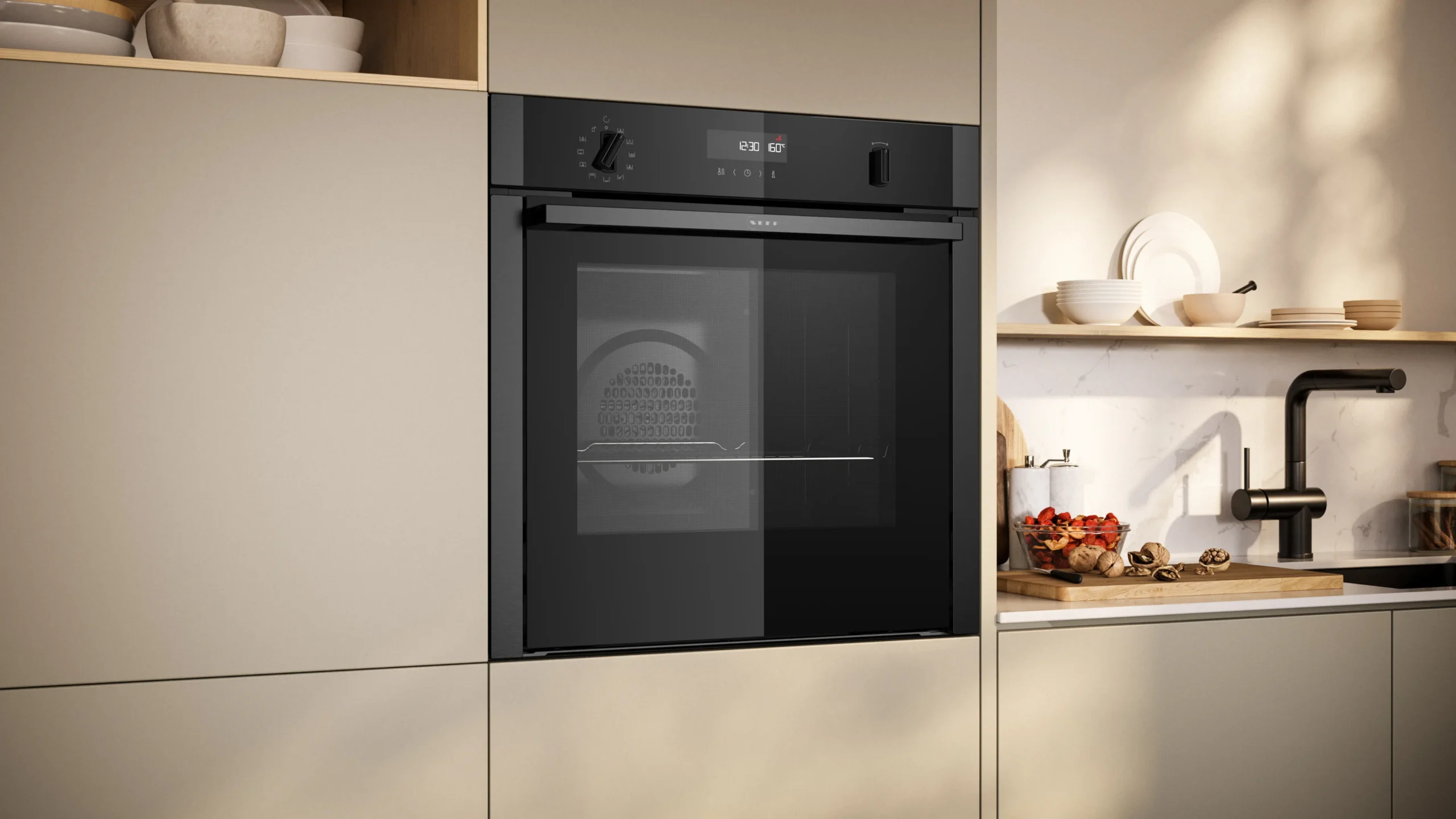
Choosing the right oven can be overwhelming, given the numerous models and features available on the market. It’s important to have a clear understanding of what’s available and what suits your needs before you make a final decision.
Whether you’re renovating, replacing an older unit, or buying for a new build, this oven buying guide breaks down everything you need to know to find the right fit for you.
Different Types of Ovens
Ovens are no longer one-size-fits-all. From how they’re installed to how they cook, the right choice depends on your kitchen layout and how you like to prepare meals. Below, we’ve grouped the key oven types to help you understand what will work best in your space.
By Installation Type 🔧
How your oven fits into your kitchen is just as important as how it cooks. Some models blend into cabinetry for a seamless look, while others offer a simple freestanding setup. If you’re renovating or replacing an existing unit, the installation style is often the first decision, and can help narrow your options quickly.
| Oven Type | What It Is | Best For |
| Built-In Oven | Installed directly into kitchen cabinetry, usually under the bench or in a wall column. Offers a clean, modern look and takes up less visible space. | Renovated or custom kitchens where you want a seamless, integrated finish. Ideal if you’re using a separate cooktop, which is more costly. |
| Wall Oven | A type of built-in oven mounted at eye level. Easier to access without bending, especially helpful for older users or those with back/knee issues. | Families or anyone who prefers easy access and visibility. Often used in double oven setups or combined with built-in microwaves or steam ovens. |
| Freestanding Oven | A standalone unit that includes both an oven and cooktop in one. It fits between cabinets and doesn’t require built-in cabinetry to house it. | Budget-friendly renovations, rental homes, or simple replacements where cabinetry changes aren’t needed. Easy to install and swap out. |
By Functionality 🍲
Some ovens are designed for everyday, no-fuss use, while others are better suited to precise cooking or multitasking. In this section, we break down the main oven types based on how they function, so you can decide what matches your habits, space, and budget.
| Conventional Oven | What it is: A conventional oven uses top and bottom heating elements to generate heat, without a fan to circulate air. Heat rises naturally in the cavity, which means the top of the oven is often hotter than the bottom. Many ovens still offer this as a setting, though it’s rare to find a standalone oven that only operates in this mode. Most full-size ovens now include fan-forced and multifunction capabilities. Purely conventional ovens are typically benchtop models, which we don’t stock in-store.
Ideal for: Useful for those who prefer a simple, familiar cooking mode. The conventional setting is still good for baking items that need gentler heat or for recipes where top-down browning is preferred. Things to Consider: Heat tends to rise, which means the top of the oven is hotter than the bottom. This can result in uneven cooking unless you rotate trays. Preheating also takes longer compared to fan-forced settings. For everyday use, most people benefit from the flexibility of a multifunction oven. |
| Fan-Forced / Convection Oven | What it is: A fan-forced oven (also called a convection oven) uses a fan and exhaust system to circulate hot air throughout the oven cavity. This results in more even cooking and faster preheating compared to conventional models. Because the temperature is distributed more consistently, you can cook multiple trays at once without worrying about hot spots or uneven results.
Ideal for: Great for baking batches of biscuits or cooking large family meals where you need to use multiple trays at the same time. The even heat distribution makes them ideal for roasting meats, vegetables, and getting a good finish on oven-baked dishes.
Things to Consider: Some delicate dishes (like sponge cakes or soufflés) can be affected by the airflow, so it’s worth looking for a model that lets you switch the fan off. Cheaper models may also have louder fans or less consistent heat. |
| Steam Oven | What it is: A steam oven cooks food using water vapour rather than dry heat. It works by injecting steam into the cooking cavity, either through a built-in water reservoir or a direct water connection. Some steam ovens are purely steam-based, while others offer combination settings that mix steam with conventional heat for more versatility. They also reheat leftovers without drying them out, making them useful for families or batch cooking.
Ideal for: Steam ovens are great for anyone who wants healthier meals without sacrificing flavour or texture. They’re ideal for vegetables, fish, poultry, rice, and even baked goods like bread (thanks to the perfect rise and crust steam provides).
Things to Consider: Steam ovens are typically smaller in capacity than traditional models and may require regular cleaning. Pure steam models don’t brown or crisp food, so they aren’t a replacement for a traditional oven unless they include a combination mode. You’ll also need to refill the water reservoir between uses unless plumbed in. |
| Steam & Combi Oven | What it is: A steam and combi oven combines steam cooking with traditional heating methods like fan-forced or top/bottom elements. This gives you the flexibility to cook with steam only, dry heat, or a combination of both for precise cooking control and better results across a wider range of dishes. We believe that every household should have a combi steam oven due to its versatility.
Ideal for: These ovens are perfect for home cooks who want more versatility. You can roast a chicken that’s crisp on the outside and juicy inside, bake crusty bread with a soft centre, or reheat meals without drying them out. It’s handy for families, food lovers, or anyone interested in healthier cooking without losing flavour. To be honest, the options for what you can do with a steam & combi oven are endless.
Things to Consider: Combi ovens usually sit at the higher end of the price range and may require more bench or wall space than standard ovens. You’ll also need to clean and maintain the steam system, particularly the water reservoir. |
| Combi Microwave Oven | What it is: A combi microwave oven combines the speed of a microwave with the cooking capabilities of a convection oven and grill. Unlike a standard microwave, which only reheats or defrosts using microwave energy, a combi model can bake, roast, and brown food thanks to built-in heating elements and a fan for even heat distribution.
Ideal for: Perfect for smaller kitchens, apartment living, or as a second oven. It’s handy for busy families or anyone who wants to quickly cook meals with better texture than a regular microwave provides.
Things to Consider: Combi microwave ovens have smaller capacities and are best suited for medium to small meals. They may not fully replace a conventional oven for larger households or serious baking. Not all models perform equally across functions, so it’s worth comparing reviews. |
| Pyrolytic Oven | What it is: A pyrolytic oven has a built-in self-cleaning cycle that heats the oven to extremely high temperatures of around 400–500°C to incinerate food residue and grease into ash. Once the cycle is complete and the oven cools, you can wipe the base clean with a damp cloth, so there’s no need for harsh chemicals or scrubbing.
Ideal for: Perfect for busy households, keen home cooks, or anyone who uses their oven regularly and doesn’t want to spend time deep cleaning it. It’s especially handy if you roast often (especially greasy food) and want to keep the oven interior in good condition without the effort.
Things to Consider: Pyrolytic ovens sit at the higher end of the price range and use more energy during cleaning cycles. The oven will lock during cleaning for safety, which can take up to a few hours. But if you value low-maintenance convenience, the time and energy trade-off can be well worth it. |
| Double Oven | What it is: A double oven includes two separate cooking compartments, either stacked vertically or arranged side by side, allowing you to cook multiple dishes at different temperatures at the same time. The top oven is usually smaller and may function as a grill or compact oven, while the bottom is a full-sized, multifunction oven. Double ovens are available in both built-in and freestanding models.
Ideal for: They’re ideal for busy households, entertaining, or anyone who regularly prepares multiple dishes at once. For example, you can roast meat in one oven while baking dessert or keeping sides warm in the other. This added flexibility saves time and prevents flavour transfer between dishes.
Things to Consider: While they take up more space and are usually more expensive than single ovens, the extra capacity and convenience can be a worthwhile trade-off for those who cook frequently. |
By Power Source 🔌
Choosing between a gas and electric oven usually comes down to what’s already available in your home, but it’s still worth knowing the pros and cons of each.
| Power Source |
What It Is |
| Electric Oven |
|
| Gas Oven |
|
Different Oven Sizes & Finding The Right Size For You
Choosing the right size oven means balancing your kitchen layout with how much cooking you do. Too small and you’ll struggle to cook for your household. Too large and you’ll waste energy heating space you don’t need. Knowing what size suits your cooking habits can save you time and money.
Oven Width
60cm is the most widely used size in Australia and will fit most cabinetry. Wider models offer more space but require a larger cut-out and may limit placement options. Here’s a simple guide:
| Width |
Common Use |
| 60cm | The standard width for most Australian kitchens. Easily fits into existing cabinetry and supports most oven functions, including fan-forced and pyrolytic models. |
| 70cm | Offers a slightly roomier interior without needing major cabinetry changes. Good if you want a bit more space without jumping to a 90cm footprint. |
| 90cm | Wide-format ovens for those who entertain or cook in large batches. Ideal for fitting big trays or cooking multiple dishes at once. Requires a larger cavity and more ventilation space. |
If you’re upgrading, it’s worth checking whether your current kitchen setup can support a wider model before committing.
Oven Capacity (Litres)
Internal oven space is measured in litres. It is used to give you a general idea of how much food you can cook at once:
| Capacity |
Best For |
| 50–70L | Compact ovens that suit singles, couples, or homes with limited kitchen space. Ideal if you don’t cook large meals often or mostly use the cooktop. |
| 70–90L | A versatile size for medium-sized households. Large enough for most family meals and everyday baking, without taking up too much space. |
| 90L+ | Great for big families, entertainers, or anyone who batch cooks. These ovens offer extra room for large trays and multiple dishes, but may use more energy. |
Even if you have the space, don’t go bigger than you need. Larger ovens can take longer to preheat and cost more to run.
Need Help Choosing the Right Oven?
At Brisbane Appliance Sales, we’re here to help you find the perfect oven for your home.
With over 30 years of experience and the widest range of ovens in Brisbane, we’ll help you choose a model that fits your kitchen, your budget, and the way you cook.
Visit our showroom or contact us today for expert advice!